Wheaton |
St. Charles |
Sycamore
 630-665-7300



- Home
- Our Firm
- Our Team
- George S. Frederick
- Lynn M. Mirabella
- Henry D. Kass
- Lindsay C. Stella
- Joshua D. Bedwell
- Stacey A. McCullough
- John W. Demling
- Megan C. Harris
- Kira N. Albrecht
- Jacqueline M. Mazur
- Bradley P. Erdman
- Catherine D. Sheehan
- Michael J. Rutcosky
- Jessica L. McGary
- Chad A. Baker
- Naseem N. Hosseini
- Lacey K. Boulware
- Lindsey G. Mirabella
- Amanda J. Werve
- Jordan E. Jenquin
- Matthew P. Karstens
- Maxwell J. Sharkey
- Joseph Mirabella
- John Kincaid
- Practice Areas
- Testimonials
- Media
- Blog
- Contact Us
Recent Blog Posts
Dividing Debt in Divorce
 Illinois is a state that utilizes the equitable distribution theory of asset division when a couple is divorcing. This means that any assets acquired during the marriage will be divided fairly between the parties, based on a number of factors like future earning potential. However, what many forget is that this is true for marital debts as well. If a debt is incurred during the marriage and classified as marital, the responsibility to repay it may be divided between the parties.
Defining Marital Debts
Not every debt incurred during your marriage will automatically be classified as marital. If you incur a debt related to a non-marital asset, such as a loan related to a non-marital business, it could be held to be a non-marital debt. So, for example, if you purchase a second automobile with income generated from a non-marital business, sign a loan as an individual, and do not list your spouse on the title or the insurance, it is, in theory, a non-marital asset and the loan used to finance it is a non-marital debt.
Potential Roadblocks to a Successful Adoption
 The decision to adopt a child can be one of the most rewarding yet terrifying undertakings of a person's life. As such, most people do go into the process with an understanding of how difficult and laborious it can be. Still, no one can be prepared for everything, and certain roadblocks can slow down the adoption, especially if you are caught by surprise when problems arise.
Problems With the Birth Parents
Among the issues that tend to occur in this regard is a birth parent either deciding against going through with the agreement or later deciding that they want to reclaim their child. While this is not necessarily common, it does happen and can place both the birth parent and the child in legal limbo. The birth mother retains the right to parent her own child up until the final paperwork has been signed, and sometimes this leads to adoptive parents being left with nothing but money spent and pain in their hearts, despite the solid legal foundation for this rule.
How to Ask Your Partner for a Prenuptial Agreement
 Prenuptial agreements, also called “prenups” or premarital arrangements, are legal contracts that establish the property and financial rights of each spouse should a marriage end in divorce. Prenuptial agreements are a somewhat controversial topic for a number of reasons. Some individuals believe that prenups are only necessary for celebrity weddings or for those people who do not plan on being married for the rest of their lives. They think, why plan for a divorce before the marriage has even begun?
In reality, prenuptial agreements are one of the most responsible things you can do to protect your financial interests. Signing one does not mean that you think the marriage is doomed to fail. Consider it a different way; if you own a car, you must have car insurance. This does not mean that you believe you will crash the car or get into an accident. You are simply planning for the worst while hoping for the best. When it comes to prenuptial agreements, the old adage “better safe than sorry” holds true.
The Pros and Cons of Nesting
 Figuring out living arrangements after a divorce can be complicated. Should the father move out of the marital home or should the mother? Where should the children's favorite toys or school supplies be located? Most divorced parents live in separate homes and their children spend time in each of the two houses. However, some innovative parents have found another way to co-parent. It is called “nesting”—sometimes known as “bird-nest parenting”—and it refers to a living arrangement where children stay in one home and the parents take turns spending time with them.
In such a scenario, for example, the mother may stay with the children in the primary home for two weeks each month. She would then go back to a home of her own for the other two weeks while the father stays with the children.
Nesting Is Not for Everyone
Nesting does certainly make things easier on the children in many ways. They have one location to keep all their things and one place to call home. This predictability and constancy is healthy for the children and can help make the transition after a split easier.
Back to School Tips for Separated or Divorced Parents
 The lazy days of summer are coming to an end, and many families are preparing for a new school year. Getting back into the swing of school after summer break can be especially chaotic for families who have experienced a major change like a divorce or separation. Who will buy the backpacks? Who will pick up the kids after school? How will parent-teacher communication work? Every situation is different but there are some steps parents can take to help ease the transition from summer to the school year.
- Let your child's teacher know about the family circumstances. If you and your ex have recently separated, you may be unsure how to make sure both parents stay in the loop regarding homework, projects, and special events. Letting the teacher know that your child splits his time between two households helps the teacher accommodate the situation. Make sure the school has both parents' contact information. Also let the school know if any other adults like step-parents will be picking up the kids after school;
Identifying Sexual Harassment
 Under Title VII of The Civil Rights Act of 1964, it is illegal to discriminate against any employee on the basis of his or her race, color, religion, sex or nationality. This means that an employer cannot use a person's gender as an excuse to treat him or poorly. Sadly, sexual harassment in the workplace continues to be a common occurrence, as a recent high-profile example demonstrates.
In April, the controversial television host Bill O'Reilly was fired from the Fox News Channel after five women claimed that they were harassed by him. O'Reilly allegedly made inappropriate remarks about a woman's skin color, allegedly made lewd comments to other women, and allegedly even called women on the phone while he was masturbating. The women were allegedly told that if they complained that they would “pay so dearly that [they]'ll wish [they] had never been born.” Reports indicate that O'Reilly and the network have paid out more than $13 million in settlements related to the allegations.
Software Could Help in the Fight Against Workplace Sexual Harassment
 A few weeks ago, a post on this blog discussed the problems that a prominent tech company faced following allegations of widespread sexual harassment and attitudes that permeated the culture of the organization. In the months since, a former Uber software engineer went public with her experiences, dozens of other women in tech startups have come forward with stories of their own. The entire tech industry, it seems, is a hotbed for inappropriate behavior toward women. Ironically, technology may be one of the keys to tracking down and eliminating sexual harassment in the workplace.
Work Emails and Text Messaging
A growing number of companies around the country exchange information by email and instant messaging using company-specific servers. It is often on these very servers that abusers send sexually-charged messages, comments, or propositions to their victims. Developing technology, however, allows network administrators to install a type of artificial intelligence (AI) on the server to analyze any data being exchanged. AI systems are already being used to help gauge employee morale, as such concerns are often expressed in inter-company emails and messages, and experts believe similar programs could be developed to screen messages for sexual content.
What Is a Declaration of Invalidity of Marriage?

Sometimes, a marriage is doomed from the beginning for one reason or another. Some couples may find a glaring incompatibility, while others discover that their marriage is void (or voidable) as a matter of law. While, in theory, any married couple can file for divorce, in some cases, it may be easier or more fulfilling to obtain a declaration of invalidity of marriage in Illinois—especially if there is a legal impediment to your marriage and not just personal differences.
Grounds to Claim Invalidity
In Illinois, there are four grounds on which a person can petition to have their marriage declared invalid:
- The lack of capacity of either party to consent to the marriage due to a factor such as mental illness, fraud, or force;
- The inability of one party to physically consummate the marriage;
- One or both parties being underage and lacking the appropriate permission of their parent or guardian to marry; or
Understanding the New Child Support Law in Illinois
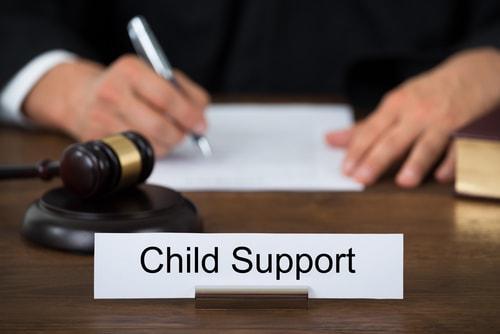 Major revisions have been approved to the way that child support is calculated by courts in Illinois. The topic has been the center of debate for a number of years, and many believe the change is long overdue. Effecitve July 1, 2017, there is an entirely new method of determining how much a supporting parent is required to pay.
What Is New About the Law?
The law, which took effect on July 1, amends the existing “percentage of obligor's net income” methodology for child support calculations. Critics have long maintained that such a model is too static, one-sided, and outdated. Under the new law, Illinois will begin using the “income shares” model that is presently in use in many other states.
Under the former law, the way that courts calculated child support for either parent was primarily based on using a fixed percentage of the nonresidential parent's income and the number of children involved in the order. For example, if there was one child to support, the parent without primary residential responsibilities would be expected to pay at least 20 percent of his or her net income in child support. Because those calculations did not take into account the income of the other parent, they produced results, in many cases, that did not sufficiently address the best interests of the children involved.
Your Child's Wishes Regarding Parenting Arrangements
 While parents all want to do what is best for their children, including allowing their voices to be heard, sometimes their wishes are not what is in their best interest. Depending on the circumstances, this may also prove to be the case in divorce and parental responsibility proceedings. In many instances, a judge will consider a child's wishes regarding which parent they live with, but a child's wishes are not the deciding factor.
What Does the Law Say?
Illinois law holds that a child's wishes regarding residential living arrangements can be taken into account as long as the child's “maturity and ability to express reasoned and independent preference” is appropriately considered. In other words, the wishes of a child who is better able to express themselves in a manner consistent with them forming an independent opinion will be given more weight than that of a child who simply parrots their parent or older sibling. Generally, this means that older children's opinions will have more impact, but this is not always the case. An extremely articulate younger child might very well have a firm grasp on the situation and could, therefore, be taken more seriously.
 Read More
Serving DuPage, Kane, Kendall, Will, Cook, and Lake Counties Since 1949
For guidance with your case, contact our attorneys at 630-665-7300. We will answer your questions, explain the process relevant to your case, and advise how best to proceed. Our firm has locations in Wheaton and St. Charles, Illinois, and we work with clients throughout the Chicagoland area, including, DuPage, Kane, Kendall and Will Counties.
Looking for something specific?
Search our site here.


From our law offices in Wheaton, St. Charles, and Sycamore, the family law and civil litigation law attorneys of Mirabella, Kincaid, Frederick & Mirabella, LLC represent businesses and individual clients throughout the western suburbs of Chicago, including Wheaton, Naperville, Oak Brook, Oakbrook Terrace, Glen Ellyn, Carol Stream, Lombard, Downers Grove, Burr Ridge, Hinsdale, Lisle, Elmhurst, Winfield, Woodridge, Warrenville, and throughout DuPage County. We also serve clients in Will County, Kendall County, DeKalb County, and Kane County, including St. Charles, Sugar Grove, Geneva, DeKalb, Batavia, Aurora, North Aurora, Elgin, Algonquin, Barrington Hills, Bartlett, Big Rock, Burlington, Campton Hills, Carpentersville, West Dundee, East Dundee, Elburn, Hampshire, Huntley, Kaneville, Maple Park, Sleepy Hollow, and Wayne.
Results listed are not a guarantee or indication of future case results.
1737 South Naperville Road, Suite 100, Wheaton, IL 60189
630-665-7300